Vibration analysis
Assess rotating equipment for bearing defects, imbalance, misalignment, looseness, gear defects and resonance.
MONITORED PARAMETERS
Velocity (mm/s), acceleration (g) and displacement (µm).

RELIABILITY & CONDITION MONITORING
Understand equipment health before a developing issue becomes a disruption. Practical inspection, analysis and alignment for the machines your operation depends on.
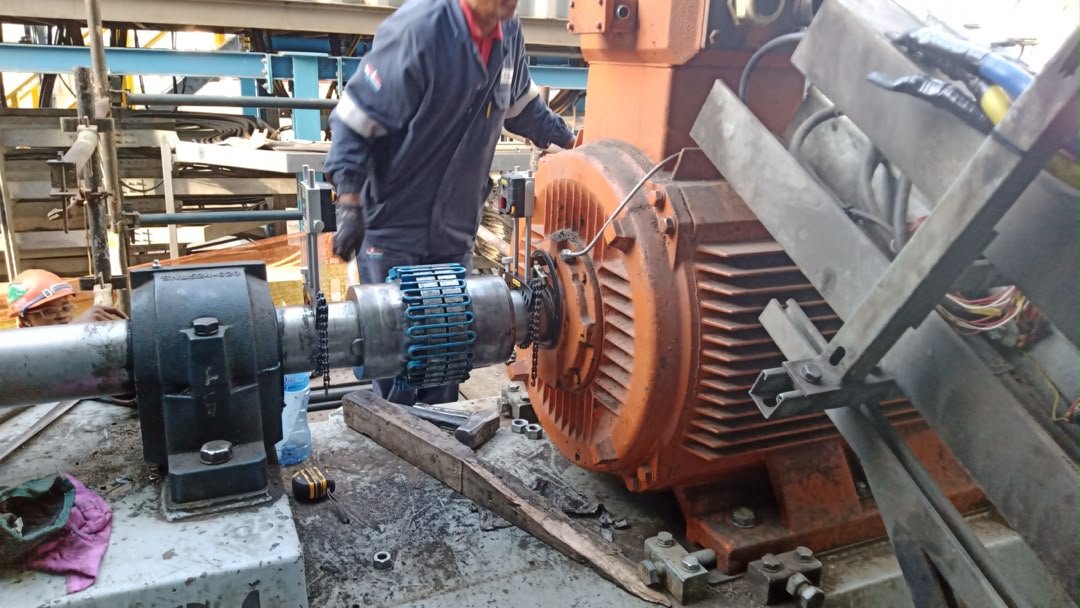
CONDITION BASED MONITORING / CBM
Maintenance decisions start with an understanding of how equipment is performing.
Condition Based Monitoring assesses electrical and mechanical equipment while it is operating. Inspection, measurement and trending help identify developing issues and support maintenance planning before failures occur.
Our reliability offering brings together six complementary techniques, selected to suit the equipment, operating conditions and maintenance requirement.
SIX COMPLEMENTARY TECHNIQUES
From vibration and temperature to lubricant condition and alignment, each method provides a different view of equipment health.
Assess rotating equipment for bearing defects, imbalance, misalignment, looseness, gear defects and resonance.
Velocity (mm/s), acceleration (g) and displacement (µm).
Inspect equipment using non-contact surface-temperature measurements to identify thermal irregularities.
Electrical hot spots, overloaded circuits, loose connections, bearing overheating, refractory and insulation defects.
Evaluate lubricant condition and machine wear in gearboxes, turbines, compressors and hydraulic systems.
Contamination, water ingress, wear particles and lubricant degradation.
Align coupled machines to help reduce excessive vibration, bearing failures and coupling damage.
Alignment of connected shafts and the relationship between coupled equipment.
Track changes in equipment condition over time to support planned maintenance decisions.
Overall vibration, bearing condition, FFT amplitude, acceleration, temperature and hot-spot progression.
Detect high-frequency sounds associated with equipment defects and operating conditions.
Compressed-air leaks, steam-trap inspections and bearing-lubrication assessment.
EQUIPMENT IN FOCUS
A closer look at shaft-alignment setups, coupling access and the equipment involved.
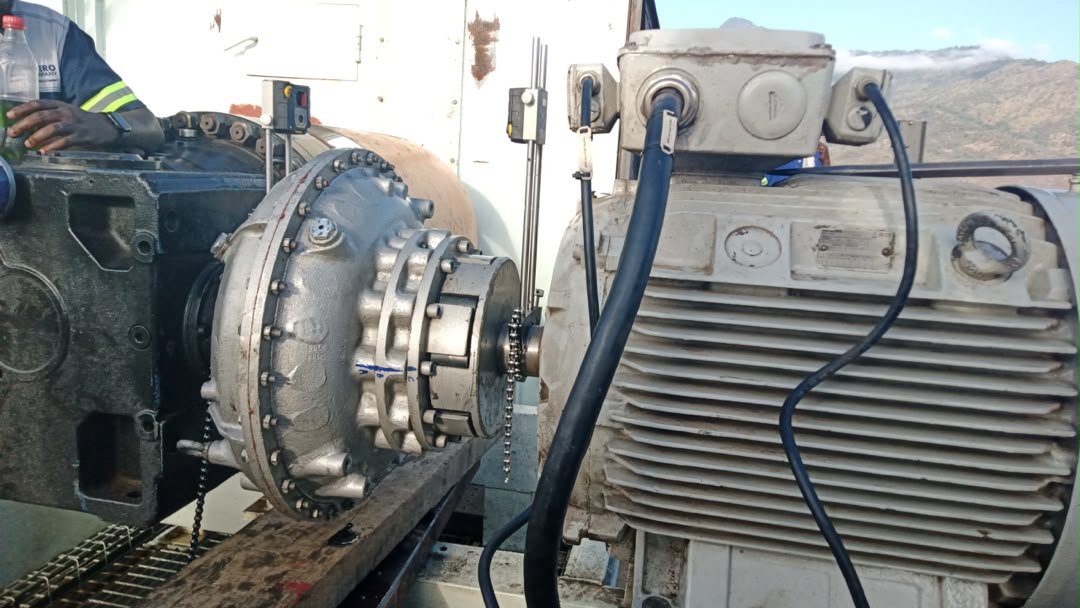
Sensor heads positioned on either side of a coupling provide a close view of the shaft-alignment setup.
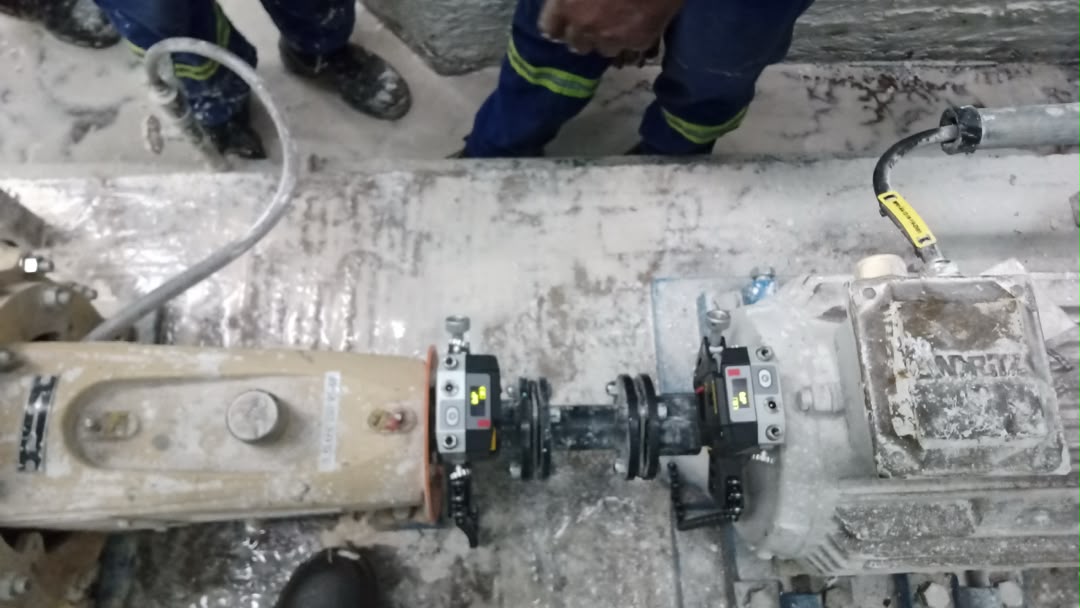
An overhead view of the sensor positions and coupling area on a motor-driven machine.
VIBRATION ANALYSIS IN VIEW
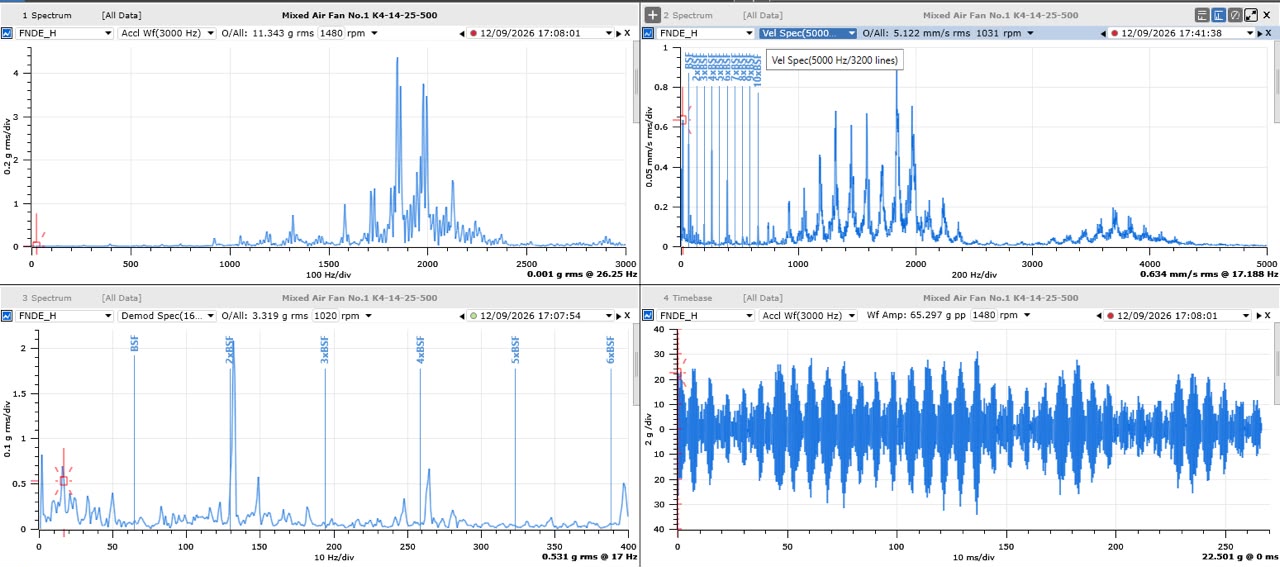
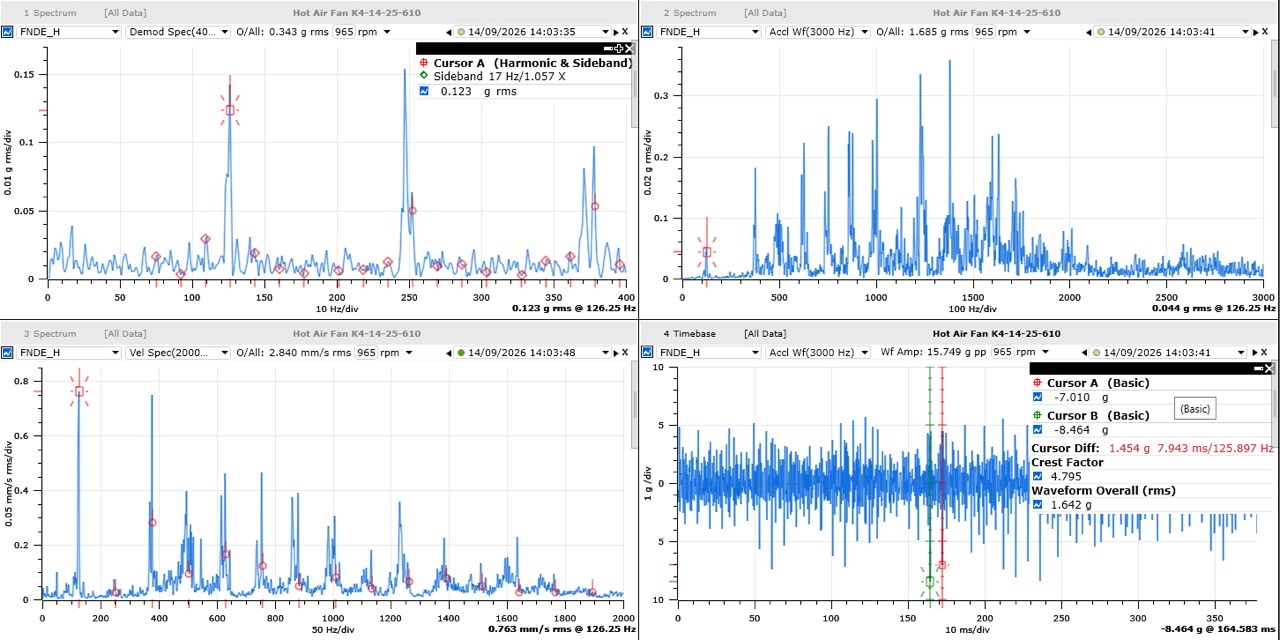
Spectrum and time-waveform plots show different aspects of vibration behaviour. Interpretation considers the machine, speed, measurement point and operating conditions.
 Open full-size chart
Acceleration, velocity and demodulation spectra alongside a time waveform.
 Open full-size chart
Multiple vibration views support a more complete assessment of rotating equipment.
The original analysis images are shown without alteration. A chart alone does not establish a fault diagnosis.
CONNECT MONITORING TO MAINTENANCE
Explore the wider engineering support available for your equipment and planned site work.
LET’S UNDERSTAND YOUR REQUIREMENT
A clear brief helps us prepare a relevant response.
Start a reliability enquiry